Why is training at an ATC-controlled airport valuable?
An airline career demands more than accurate aircraft handling. It demands clear radio communication, situational awareness, disciplined procedures and the ability to stay composed while several things are happening at once. Training at an ATC-controlled airport gives cadets a setting in which to start building those habits early.
At Indian Flying Academy’s Khajuraho base, radio telephony—RT—is part of the flying experience from the early stages of training. Our cadets learn to listen, understand and respond in an operational airport environment. That repeated exposure helps turn an unfamiliar radio call into a familiar professional responsibility.
The airline cockpit may be the destination. The habits that support that journey begin during ab-initio training.
Your training environment shapes the pilot you become
When choosing a flying academy, look beyond the aircraft and the number of hours on a course outline. Ask what those hours will teach you.
Will you learn to handle a radio call while preparing for the next phase of flight? Will airport procedures become part of your everyday routine? Will you understand how your aircraft fits into the traffic around you?
At IFA, Khajuraho brings those questions into the training experience. Cadets develop aircraft handling alongside the communication, awareness and discipline that matter as their flying becomes more demanding.
That is an important part of preparing for an airline career: building sound habits early, then strengthening them at every stage.
1. Strong RT starts with early, repeated exposure
Clear communication belongs in a cadet’s development from the beginning.
At IFA, we place particular emphasis on developing confident, accurate RT early in training. Working with ATC gives cadets regular opportunities to recognise their callsign, understand instructions, make appropriate read-backs and speak with purpose. The goal is to develop students who sound composed because they understand the exchange.
For a new student, a radio call can initially take considerable concentration. With preparation, instructor guidance and repeated practice, it becomes a more familiar part of managing the flight. That progression matters: attention can then be shared more effectively between communication, aircraft control and the next task.
AAI’s Manual of Air Traffic Services specifies read-back requirements for safety-related parts of voice clearances and instructions. It also distinguishes a route clearance from permission to take off or enter an active runway. [1] These are meaningful distinctions that cadets must understand, rather than simply memorise.
Our emphasis is on clear, accurate, composed communication at an early stage—a foundation cadets can keep developing as they progress towards professional flying.
2. Airport awareness starts on the ground
Taxiing involves more than moving from parking to the runway.
Students need to connect an airport diagram with the actual route, signs and markings in front of them. They must also keep track of the clearance they have received. Recognising a location on a chart and identifying it from the cockpit are related skills that both need practice.
The FAA’s airport-operations guidance similarly emphasises understanding taxi instructions, seeking clarification and maintaining an effective visual scan. Its jurisdiction-specific procedures should not be substituted for Indian procedures, but the broader learning principle is relevant: awareness on the ground deserves deliberate attention. [2]
For a prospective cadet, ask how ground movement and runway awareness are taught and reviewed.
3. Aircraft handling becomes part of a wider picture
A student’s own flight is one part of an airport’s activity.
Listening to airport communications can help a cadet develop an understanding of where other traffic is and how their flight fits into the situation. That mental picture must be supported by observation and instruction; hearing a radio transmission does not replace a lookout. [2]
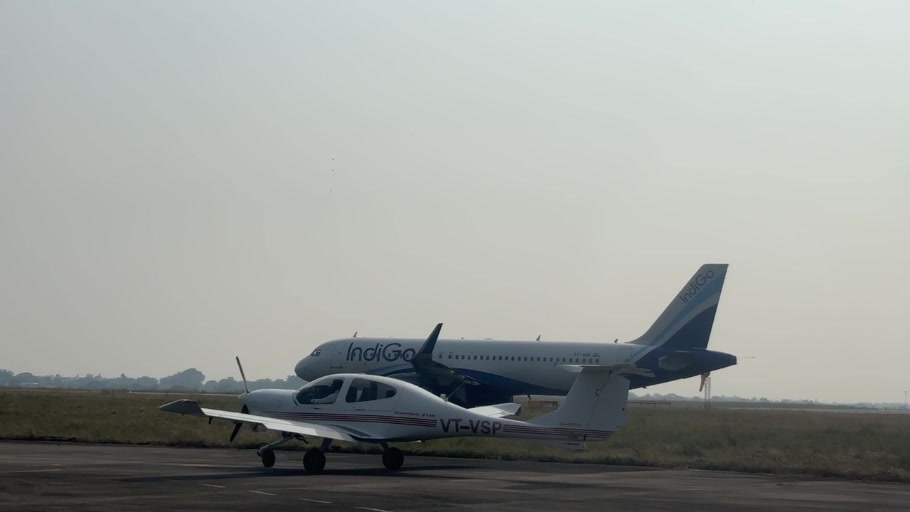
This is where the training environment becomes tangible. In footage filmed at IFA’s base, a training aircraft taxis with an airline aircraft visible in the background. It is a simple illustration of different types of aviation using the same airport.
For an aspiring airline pilot, that setting makes the career ahead feel tangible. More importantly, it gives everyday lessons a professional context: your communication, preparation and awareness matter within a wider airport operation.
At IFA, the journey towards professional flying begins in the way you approach each training flight.
Watch a real view from IFA’s training base.
4. Students practise managing attention
A lesson can require a student to handle the aircraft, monitor instruments, navigate, listen and prepare for the next action.
An instructor helps the cadet organise those demands. Preparation can make an unfamiliar task more manageable; a debrief can show where attention was spent well and where it was stretched.
The FAA’s Risk Management Handbook treats situational awareness, communication, task allocation and decision-making as connected aspects of resource management. [3] In training, the aim is to develop those habits progressively, alongside handling skills.
There is no benefit in overwhelming a beginner. The quality of the instruction determines how effectively the environment is used.
5. Operational discipline becomes easier to understand
An active airport makes the reasons behind procedures visible.
Planning, checks, communication and coordination all have a place in the flow of a flight. An instruction may change the immediate plan. A student needs to recognise that change, work through it with the instructor and understand what happens next.
That provides useful material for a debrief: what did we expect, what changed, and how did we respond?
It also introduces the importance of patience. Traffic and operating conditions can affect a training sortie. Professional habits include preparing properly and adapting thoughtfully.
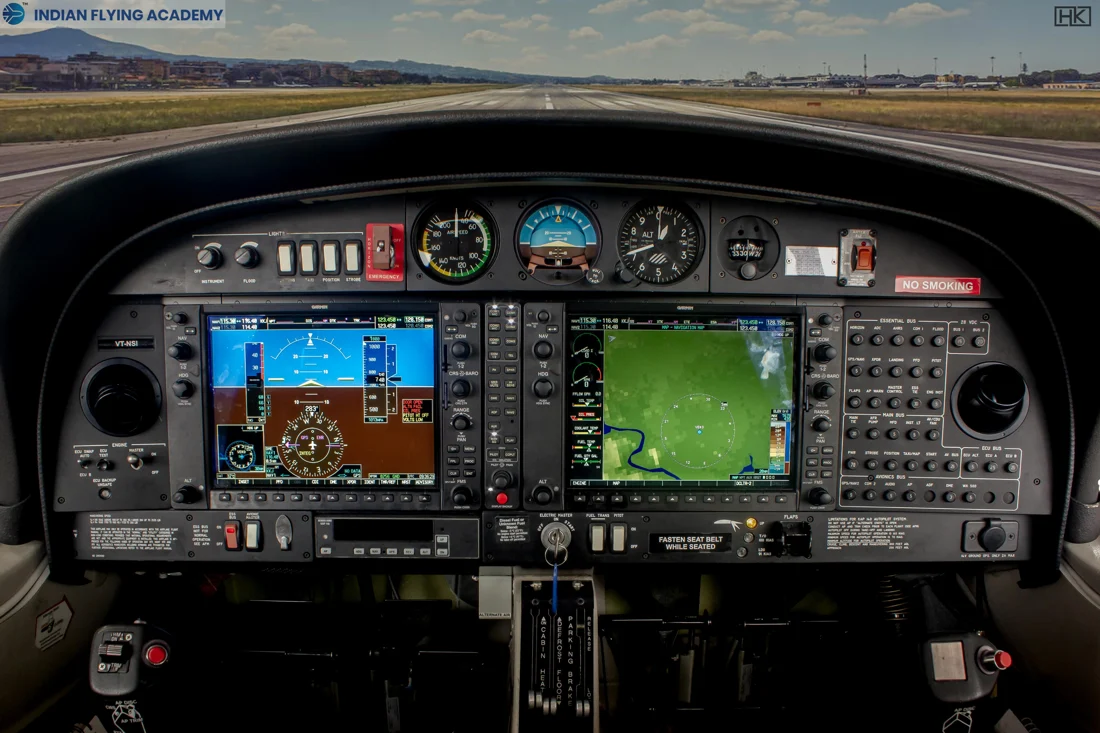
How this builds towards airline readiness
Airline readiness is developed over time. The foundations include accurate communication, procedural discipline, situational awareness and the ability to organise work without losing the bigger picture.
These are precisely the habits that a well-taught controlled-airport training environment can help cadets practise:
| Early training habit | Why it matters as a pilot progresses |
|---|---|
| Listening carefully and making accurate read-backs | Supports clear, dependable communication with ATC |
| Preparing before taxi and anticipating the next task | Builds a structured approach to workload |
| Tracking position, clearances and surrounding traffic | Develops awareness beyond the aircraft’s controls |
| Asking for clarification when something is unclear | Reinforces sound judgement and professional communication |
| Following procedures and learning from debriefs | Builds consistency and a habit of continuous improvement |
At IFA, this is the connection we want prospective cadets to understand: your CPL training should help shape how you think and operate as a future professional pilot.
A CPL is one stage of that journey. Airline selection, further training and aircraft-specific qualifications still follow. Building these foundations early gives cadets relevant habits to carry into those next stages.
Why Khajuraho matters to the IFA training experience
IFA is based at Khajuraho Airport, operated by the Airports Authority of India. Published AAI aerodrome information identifies its 2,286-metre runway and air traffic services; current ATS hours must be checked against applicable NOTAMs. [4]
For cadets, the combination is worth seeing in person: IFA’s Diamond aircraft, the airport layout and the operating environment around the flight line.
A base visit is also an opportunity to ask how the academy plans flying around available operating hours and how instructors prepare students for airport communications.
For an aspiring professional pilot, that combination is compelling: Diamond aircraft, exposure to a controlled-airport environment and an emphasis on the habits behind confident flying. Visit the base and see how those elements come together.
What should you ask when comparing flying schools?
| Ask the school | What the answer helps you assess |
|---|---|
| How do students prepare for ATC communication? | Whether radio work is taught progressively |
| How are taxi routes and airport markings introduced? | The attention given to ground awareness |
| How do traffic and operating hours affect scheduling? | Whether the school explains practical constraints clearly |
| What happens when a student does not understand an instruction? | How instructors support clarification and learning |
| How are flights debriefed? | Whether experience is turned into specific improvements |
These questions help move the discussion beyond an aircraft photograph or a promised completion date.
Frequently asked questions
What is an ATC-controlled airport?
In this context, it means an airport where an operating air traffic control unit manages relevant airport traffic and issues the applicable clearances and instructions. Students must learn the procedures that apply to the particular airport and operation. [1]
Can a beginner learn at a controlled airport?
Yes, with suitable instruction and progressive preparation. Beginners are taught how to handle the aircraft while gradually developing the communication and awareness needed for their operating environment.
Does a controlled airport mean faster CPL completion?
Not necessarily. Training progress depends on the student, aircraft and instructor availability, weather and operating conditions. Airport traffic may also affect scheduling. Ask for a realistic explanation of how flying is planned.
Is training at a non-towered airfield inferior?
No. Different airfields provide different learning opportunities. A controlled airport offers direct experience of working with ATC during its operating hours; it is one factor to assess alongside instructional quality, serviceability and training progress.
How does training at Khajuraho support an airline career?
It provides a setting for developing communication, workload management, airport awareness and procedural discipline during CPL training. At IFA, early RT development is an important part of that foundation. Cadets must subsequently meet the qualifications, training and assessment requirements relevant to an airline role.
See the training environment for yourself
Choosing a flying school means choosing the setting in which you will build your habits as a pilot.
At Indian Flying Academy, a visit to Khajuraho lets you see the Diamond fleet, meet the admissions team and ask how airport operations fit into your training journey.
Your ambition is an airline cockpit. Choose a training environment that helps you start building professional habits today.
Explore IFA’s CPL programme and request a base visit.
Sources & further reading
Official references supporting the training principles and airport background. The AAI airport reference is a dated archive; FAA sources support general educational principles.

Pilot training at Khajuraho Airport, Madhya Pradesh.
Explore the academy ↗