Is the Diamond DA40 better than a Cessna 172 for pilot training?
The Diamond DA40 is a compelling choice for CPL training because it combines a panoramic canopy, a composite airframe and, in Garmin-equipped aircraft, an integrated glass cockpit. For students who value an open cockpit view and experience with digital flight information, that combination is a strong reason to choose it. The Cessna 172 remains a capable trainer; the advantage depends on the aircraft configuration and the quality of instruction.
At Indian Flying Academy, we choose Diamond DA40 and DA42 aircraft to give cadets a consistent training environment across single-engine and multi-engine flying. Here is what makes the DA40 an important part of that approach.
1. A cockpit view that makes flying feel more connected
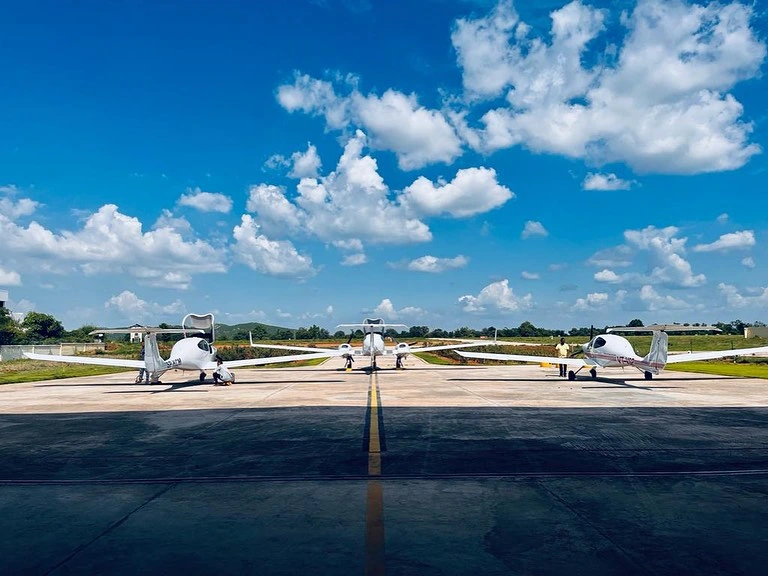
The DA40’s panoramic canopy is one of its defining features. Diamond highlights visibility throughout flight manoeuvres as a central part of its training-aircraft design. [1]
For a student, a broad outside view is valuable when learning to relate the aircraft’s attitude to the horizon. It also supports the visual work involved in circuits, lookout and orientation around an airfield.
The view is part of the appeal of flying, too. When prospective cadets visit IFA, sitting in the cockpit is a useful way to understand the difference between seeing an aircraft in a photograph and imagining their first lesson in it.
Good visibility still requires disciplined scanning. No canopy design replaces a proper lookout.
2. Glass-cockpit experience from the early stages of training
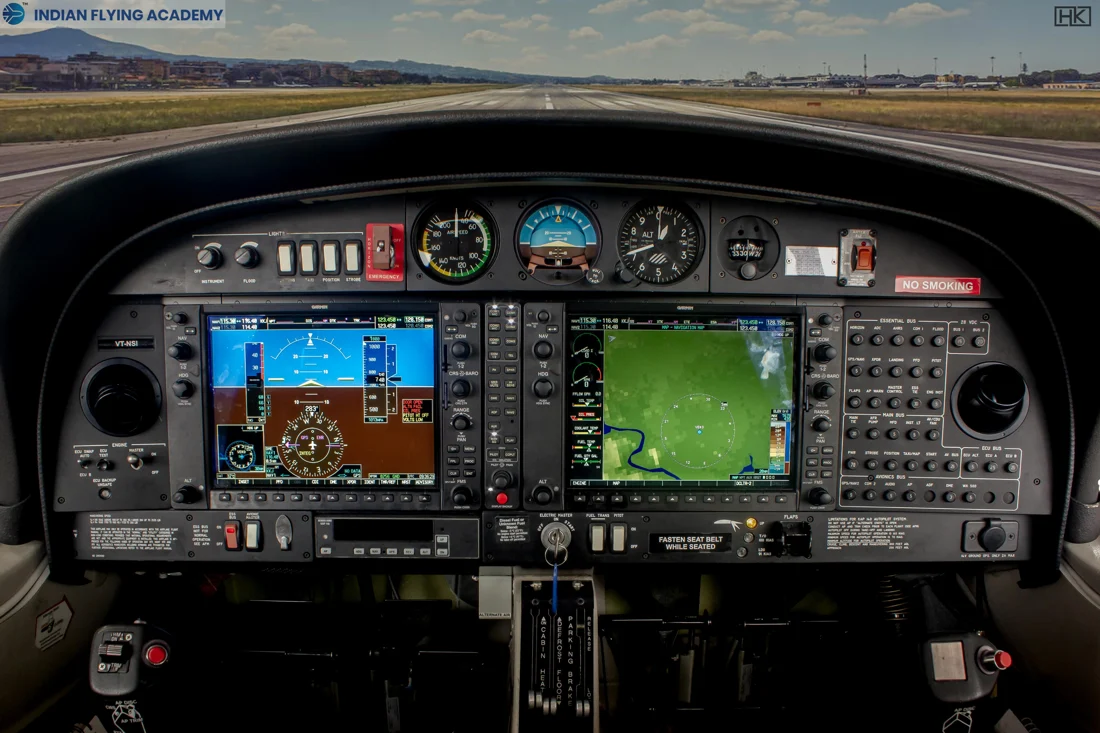
IFA’s DA40 and DA42 aircraft use Garmin G1000 avionics. That gives cadets the opportunity to develop familiarity with an integrated flight-information environment throughout their training.
The educational value lies in learning how to interpret information, manage attention and follow procedures. A good lesson balances outside reference, instrument scanning and aircraft control; the screen supports those skills.
This is also where a fair DA40 vs Cessna 172 comparison matters. Today’s Cessna Skyhawk offers Garmin G1000 NXi as well. A glass cockpit is therefore an advantage over an analogue-equipped aircraft, rather than an exclusive advantage over every Cessna. [2]
Students should compare the actual aircraft they will fly, including its equipment and condition.
3. A purpose-built platform for developing handling skills
Diamond describes its training aircraft as combining responsive handling with forgiving flight characteristics. [1] That is an appealing balance for a student learning to make accurate, measured control inputs.
Our view is that the DA40’s value comes from what cadets can practise in it: coordinated flying, accurate approaches, disciplined checks and consistent cockpit routines.
Those habits require repeated, well-supervised practice. An aircraft can provide the environment for learning, but an instructor must turn each flight into a useful lesson.
4. Composite construction is part of the DA40’s design identity
The DA40 uses a composite airframe. Diamond presents this construction, together with the aircraft’s aerodynamic design and handling, as part of its suitability for training and touring. [3]
For prospective cadets, the useful takeaway is the overall package: airframe design, cockpit layout, visibility and equipment working together.
Composite construction alone does not establish that an aircraft is safer than every metal trainer. Maintenance, operating procedures, serviceability and decision-making remain essential when evaluating any flying school.
5. A consistent route from DA40 to DA42 at IFA
IFA’s fleet comprises four Diamond DA40s and one multi-engine Diamond DA42. Both aircraft types use Garmin G1000 avionics.
For our CPL pathway, the flying component comprises 185 single-engine hours and 15 multi-engine hours, totalling 200 hours.
A shared avionics family gives students familiar features to build on when progressing into multi-engine training. The DA42 still introduces distinct systems, procedures and asymmetric-flight considerations; it requires dedicated instruction.
This fleet structure is a practical reason to consider IFA: your single-engine aircraft forms part of a planned training journey.
Diamond DA40 vs Cessna 172: what should students compare?
| Consideration | Diamond DA40 | Cessna 172 Skyhawk |
|---|---|---|
| Outside view | Panoramic canopy is a defining feature | High-wing layout offers a different viewing experience |
| Avionics | Configuration varies; IFA uses Garmin G1000 | Modern Skyhawks offer Garmin G1000 NXi; older aircraft vary |
| Construction | Composite airframe | Conventional metal airframe |
| Training proposition | Visibility, handling and an integrated cockpit experience | Established training platform with student-friendly handling |
| What to check | Exact variant, equipment, maintenance and availability | Exact variant, equipment, maintenance and availability |
Manufacturer descriptions support both aircraft as training platforms. Their design differences help explain preference; they do not establish a universal winner. [1][2][3]
The engine variant matters more than the badge
Not every DA40 has the same engine or avionics. Diamond lists distinct NG and XLT specifications, and its training resources also distinguish DA40 D and DA40-180 configurations. [4][5]
The DA40 NG’s published single-lever engine-control features, for example, should not automatically be attributed to every DA40. Fuel-burn, performance and engine-management comparisons should identify the exact aircraft variant.
Before choosing a school, ask: Which DA40 will I train on, and how is it equipped?
Why the training environment matters at Indian Flying Academy
An aircraft’s features become meaningful through the environment in which you learn to use them.
IFA operates at Khajuraho Airport, an AAI-controlled airport with a 2,286-metre runway. Training within ATC watch hours provides exposure to controlled-airport communications and operating routines.
For prospective cadets, the combination is worth examining in person: Diamond aircraft, Garmin-equipped flight decks and an operational airport setting.
Ask about instructor availability, aircraft serviceability, flight scheduling and how your progress will be reviewed. These questions deserve as much attention as the aircraft’s appearance.
Frequently asked questions
Why do students choose the Diamond DA40 for CPL training?
Its panoramic canopy, handling characteristics and glass-cockpit configurations make it an attractive training platform. At IFA, it also forms part of a Diamond fleet that includes the multi-engine DA42.
Does every DA40 have Garmin G1000 NXi?
No. DA40 configurations differ. Diamond’s resources distinguish conventional-instrument, G1000 and G1000 NXi aircraft. IFA describes its fleet as Garmin G1000-equipped; confirm the specific aircraft configuration during your visit. [5]
Does training on a DA40 make someone airline-ready?
A DA40 can help develop handling, instrument interpretation and procedural discipline. Airline readiness requires further qualifications, training and assessment; no basic trainer provides it by itself.
Is the DA40 better than every other training aircraft?
No single aircraft is the best choice for every school or student. IFA’s preference is based on the combination of the DA40’s design features, its equipped cockpit and its place within our DA40–DA42 training pathway.
Experience the aircraft before choosing your flying school
A specification sheet can explain an aircraft. A base visit helps you understand the training experience around it.
Explore CPL training with Indian Flying Academy at Khajuraho Airport. See the Diamond fleet, discuss your starting point and ask admissions to explain your pathway.
Explore IFA’s CPL programme and request a base visit.
Sources & further reading
Technical references from the aircraft manufacturers.
Pilot training at Khajuraho Airport, Madhya Pradesh.
Explore the academy ↗